

Table of Contents
Introduction
Choosing the right excavator is an important decision for any construction project. Whether you are working on a residential building, a commercial development, a road construction project, or a large infrastructure site, selecting suitable machinery can improve productivity, reduce delays, and help control operating costs. Smart excavator selection saves time, fuel and money on every UAE job site.
The UAE’s construction industry includes projects with different site conditions, soil types, excavation depths, and operational requirements. Therefore, contractors must evaluate several factors before selecting an excavator. The machine that works well on a small residential site may not be suitable for a large-scale earthmoving project.
This Excavator Selection Guide UAE explains how to select the right excavator according to your project’s requirements. It covers excavator types, machine size, digging depth, bucket capacity, terrain, transportation, safety, and maintenance considerations.
Understanding these factors will help contractors, project managers, and construction professionals make informed decisions when choosing equipment for their next project.
1. Understand Your Construction Project Requirements
Before selecting an excavator, identify the type and scale of work you need to complete. Different construction activities require different machine capabilities. Good excavator selection always starts with a clear picture of the work.
For example, residential construction may involve foundation excavation, trenching, and landscaping. Road construction may require extensive earthmoving, while infrastructure projects can involve deep excavation and heavy-duty operations.
A useful Excavator Selection Guide UAE starts with the following questions:
- What type of construction work will the excavator perform?
- How large is the working area?
- What is the required excavation depth?
- What type of soil or ground material will be excavated?
- How many hours per day will the machine operate?
- Is the site accessible to large construction machinery?
- How quickly must the work be completed?
Answering these questions helps you establish the machine specifications required for your project.
You should also consider the project schedule. If excavation must be completed within a short period, a machine with suitable digging power and cycle times may be more appropriate than a smaller model with limited capacity.
Clearly defining your requirements before arranging equipment can prevent unnecessary expenses and delays.
2. Choose the Right Type of Excavator
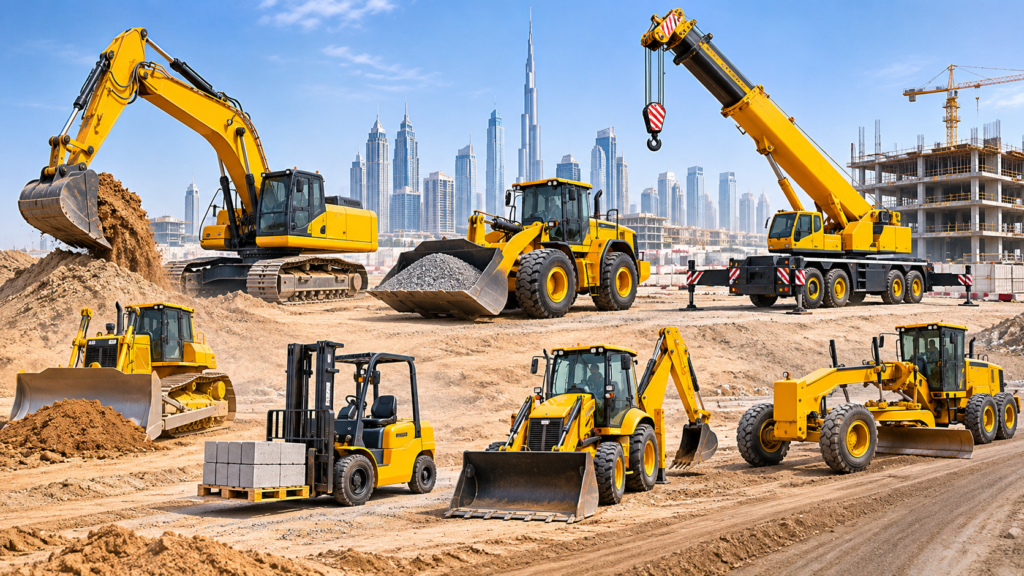
Excavators are available in different configurations, each designed for specific working conditions. Understanding their differences helps you identify the most suitable option. Machine type is the biggest decision in excavator selection.
Mini Excavators
Mini excavators are compact machines designed for projects with limited working space. They are commonly used for residential construction, landscaping, small drainage works, and utility trenching. For villa projects and tight city plots in Dubai, mini excavators are often the best excavator selection.
Their smaller dimensions make them easier to operate in restricted areas, although their digging depth and lifting capacity are generally lower than those of larger excavators.
Consider a mini excavator when your project involves:
- Small foundations and trenches.
- Residential landscaping.
- Work in narrow spaces.
- Minor demolition and site preparation.
- Projects with restricted equipment access.
Crawler Excavators
Crawler excavators use tracked undercarriages to provide stability and traction on suitable ground conditions. They are widely used for earthmoving, road construction, large foundations, and infrastructure projects. For desert sites and heavy digging, crawler models lead most excavator selection lists.
These machines are available in various sizes, from compact models to heavy-duty equipment.
Crawler excavators can be a good choice when your project requires substantial digging power, stable operation, and consistent performance over extended working periods.
Wheeled Excavators
Wheeled excavators use tyres instead of tracks and can be useful on firm, relatively level surfaces where mobility between work areas is important. Wheeled units are a smart excavator selection when you need to move quickly between road work zones.
They may be suitable for road maintenance, municipal works, and selected urban construction activities. However, the suitability of a wheeled excavator depends on ground conditions, traction requirements, and the specific task.
An effective Excavator Selection Guide UAE should compare these machine types according to site access, ground conditions, digging requirements, and expected productivity rather than choosing equipment based on size alone.
3. Select the Appropriate Excavator Size
Excavator size directly influences digging performance, lifting capability, operating weight, transportation requirements, and site accessibility. Size is where many contractors get excavator selection wrong.
Selecting a machine that is too small may slow down work, while an oversized excavator may create unnecessary costs and access difficulties.
Small Excavators
Small excavators are generally appropriate for confined construction areas, landscaping, utility installations, and smaller excavation tasks.
They offer manoeuvrability and can be easier to transport than larger models, depending on their dimensions and operating weight.
Medium Excavators
Medium excavators are commonly considered for commercial construction, foundation work, drainage projects, and general earthmoving.
They provide a balance between machine size, digging performance, and versatility. However, the exact capabilities depend on the selected model and attachments.
Large Excavators
Large excavators are designed for demanding applications, including major infrastructure development, extensive earthmoving, quarrying, and heavy excavation.
They typically offer greater digging forces and larger bucket options, but they also require more working space, appropriate ground conditions, and suitable transportation arrangements.
When applying this Excavator Selection Guide UAE, compare operating weight, engine power, maximum digging depth, bucket capacity, and lifting specifications. Always check the manufacturer’s specifications for the exact machine model.
4. Evaluate Digging Depth and Reach
Digging depth is one of the most important specifications when choosing an excavator. Always confirm the maximum digging depth during excavator selection.
Different projects require different excavation depths. For example, shallow utility trenches have different requirements from deep building foundations or underground infrastructure work.
Before selecting a machine, establish the maximum excavation depth and the required horizontal reach.
You should also consider:
- The depth of foundations or trenches.
- The height of surrounding structures.
- The position of the excavation area.
- The required distance for loading excavated material.
- Any restrictions created by underground utilities.
- The need to work safely near excavation edges.
An excavator with insufficient reach may require frequent repositioning, reducing productivity. However, choosing a machine with excessive reach does not automatically improve efficiency.
This Excavator Selection Guide UAE recommends allowing an appropriate operational margin beyond the minimum required digging depth, while checking the machine’s actual performance specifications and site conditions.
For deep excavations, a qualified site professional should assess stability, access, protective systems, and safe operating distances before work begins.
5. Consider Bucket Capacity and Attachments
The excavator bucket affects how much material can be moved during each cycle. However, the largest available bucket is not always the best choice. The right attachments can make one excavator selection do the work of several machines.
Bucket selection depends on the material being excavated, the machine’s capabilities, and the required level of precision.
Common Bucket Types
- General-purpose bucket: Suitable for many ordinary digging and earthmoving applications.
- Heavy-duty bucket: Designed for more demanding material-handling conditions, subject to manufacturer specifications.
- Trenching bucket: Narrower design for excavation work requiring defined trench widths.
- Grading bucket: Used for selected finishing, levelling, and grading tasks.
Other attachments, such as hydraulic breakers and specialised grapples, may support additional applications when compatible with the machine.
When evaluating equipment, consider the material density, bucket width, digging resistance, and loading requirements. A larger bucket may increase the amount moved per cycle, but it must remain within the machine’s approved operating capabilities.
For this Excavator Selection Guide UAE, the key recommendation is to match the bucket and attachment to the actual job instead of selecting them solely on size.
Always verify attachment compatibility, hydraulic flow requirements, and manufacturer-approved operating limits before use.
6. Assess UAE Terrain and Weather Conditions
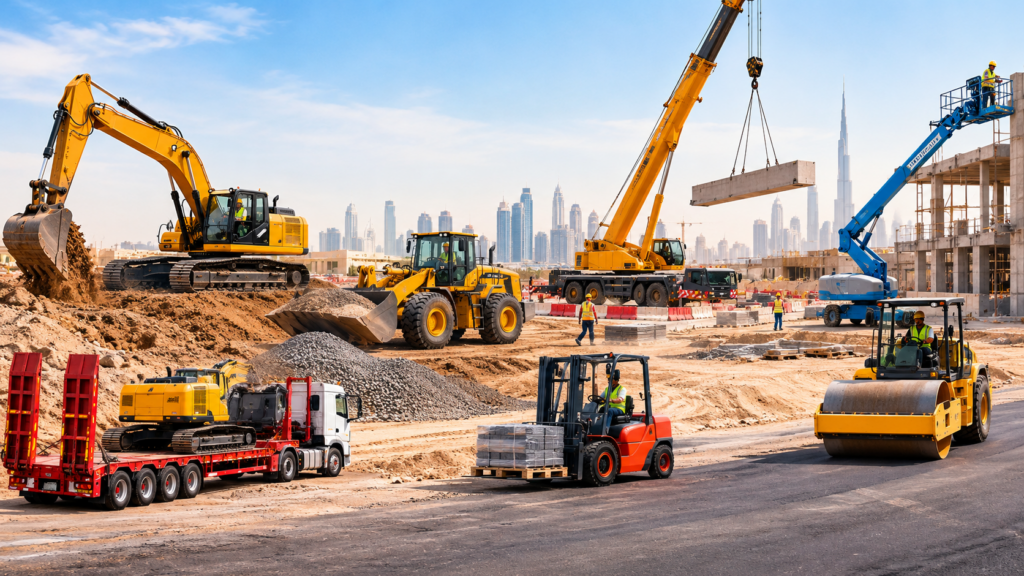
Construction sites across the UAE can include sandy ground, compacted soil, rocky surfaces, urban plots, and developed industrial areas. These conditions can influence excavator selection. Heat, sand and humidity should all shape your excavator selection in the UAE.
For sandy or loose ground, consider ground pressure, traction, stability, and the suitability of the undercarriage. For rocky or compacted material, assess digging forces, bucket design, and whether specialised attachments are necessary.
Hot weather is another important consideration, particularly during outdoor construction work.
Before equipment deployment, check:
- The machine’s recommended operating temperature.
- Cooling-system condition.
- Engine oil and hydraulic-fluid requirements.
- Air-filter condition.
- Tyre or track condition.
- The availability of routine maintenance support.
Operators should also follow applicable heat-stress prevention requirements and site-specific work-rest arrangements.
An appropriate Excavator Selection Guide UAE should account for local working conditions rather than relying exclusively on specifications provided for ideal operating environments.
Regular inspections and proper maintenance can help reduce avoidable downtime and support reliable equipment performance.
7. Compare Rental Costs and Project Duration
The cost of using an excavator depends on the machine model, rental duration, attachments, transportation, operator arrangements, and other contractual conditions. Comparing quotes is an important part of excavator selection for both short and long projects.
For many contractors, renting equipment can provide flexibility when machinery is required only for a particular project or a limited period.
Before requesting a quotation, estimate how long the machine will be needed and whether it must operate continuously or intermittently.
Compare the following cost components:
- Daily, weekly, or monthly rental charges.
- Delivery and collection costs.
- Operator charges, if applicable.
- Fuel and consumables.
- Attachment or accessory charges.
- Standby and overtime conditions.
- Damage responsibilities and insurance terms, as specified in the contract.
Do not compare quotations on the rental price alone. Check what each supplier includes and whether the proposed equipment meets your operational requirements.
The Excavator Selection Guide UAE approach is to compare the total expected cost against the productivity and capabilities required for the job.
For longer projects, confirm whether the supplier can support the agreed duration, servicing requirements, and replacement arrangements if equipment downtime occurs.
8. Check Site Accessibility and Transportation
Even a technically suitable excavator may be impractical if it cannot reach the working area. Narrow gates and low-hanging services can change your excavator selection completely.
Urban construction sites may have narrow entrances, overhead restrictions, limited turning space, or restricted delivery times. Larger machines can also require specialised transportation arrangements.
Before confirming your equipment choice, inspect the site entrance, access roads, available working space, ground-bearing conditions, and unloading area.
Consider the following questions:
- Can the machine enter the site safely?
- Is there sufficient space for manoeuvring?
- Are there overhead cables or other obstructions?
- Can delivery vehicles reach the unloading point?
- Are road transport permissions or special arrangements required?
- Is the ground suitable for the machine’s weight?
The Excavator Selection Guide UAE process should include a site-access assessment before equipment is dispatched.
Where necessary, arrange a site inspection with the equipment supplier or the responsible site professional. Confirm transportation dimensions, operating weight, and unloading arrangements before scheduling delivery.
9. Prioritise Safety and Operator Experience
Excavators are powerful machines that require trained operators and appropriate site controls. A skilled operator turns a good excavator selection into a productive one.
Before starting work, confirm that the machine is suitable for the intended task and that operators are competent and authorised under applicable requirements.
Important safety considerations include:
- Conducting pre-operation inspections.
- Checking the visibility of the working area.
- Keeping people outside designated danger zones.
- Identifying underground utilities before excavation.
- Maintaining safe distances from excavation edges.
- Using appropriate signalling and communication procedures.
- Following manufacturer instructions and site safety rules.
Ground stability must also be assessed, especially when operating near trenches, slopes, or recently excavated areas.
A qualified person should determine the appropriate protective measures for excavation conditions and local requirements.
This Excavator Selection Guide UAE highlights that productivity should never come at the expense of worker safety. Proper planning, suitable equipment, and competent operators help reduce operational risks.
10. Inspect Equipment Condition and Maintenance Support

Equipment condition can affect project performance, reliability, and operating costs. Never finalise excavator selection without a proper inspection.
When arranging an excavator, ask about its maintenance history, current condition, inspection records, and availability of technical support.
Where practical, inspect the machine before accepting delivery.
Pay attention to:
- Hydraulic hoses and visible leaks.
- Tracks, tyres, and undercarriage components.
- Bucket teeth and attachment condition.
- Engine warning indicators.
- Controls, lights, and safety devices.
- Unusual noises or excessive vibration.
- Evidence of damage or poorly maintained components.
Ask the supplier what happens if a machine develops a fault during the rental period. Clarify reporting procedures, repair responsibilities, and any applicable replacement arrangements.
For a successful Excavator Selection Guide UAE decision, maintenance support should be part of the selection process rather than an afterthought.
A suitable machine with responsive support may be more practical than a cheaper option with uncertain availability or unclear maintenance arrangements.
11. Use This Practical Excavator Selection Checklist
Before finalising your decision, review the following checklist:
- Define the project’s excavation and earthmoving requirements.
- Determine the required digging depth and horizontal reach.
- Identify the appropriate excavator type and operating weight.
- Match bucket capacity and attachments to the material.
- Assess terrain, ground stability, and weather conditions.
- Confirm site access and transportation arrangements.
- Compare quotations and total expected rental costs.
- Verify operator competence and safety requirements.
- Check maintenance support and breakdown procedures.
- Confirm delivery dates, rental terms, and equipment availability.
Following these steps makes the selection process more systematic and reduces the likelihood of choosing equipment that does not suit the project.
The most suitable excavator is the machine that meets your technical requirements, works safely within site constraints, and supports your project schedule and budget.
Frequently Asked Questions
1. Which excavator is best for a small construction project?
A mini excavator may be suitable for small foundations, landscaping, and trenching in restricted spaces. The final choice depends on excavation depth, ground conditions, bucket requirements, and access limitations.
2. How do I determine the correct excavator size?
Evaluate the required digging depth, bucket capacity, operating weight, reach, material type, and working area. Compare these requirements with the manufacturer’s specifications for each machine.
3. Is renting an excavator suitable for short-term projects?
Renting can be a practical option when equipment is needed for a limited period. Compare rental charges, transportation, operator arrangements, maintenance terms, and the expected duration of work before making a decision.
4. What should I check before renting an excavator in the UAE?
Confirm the machine’s specifications, physical condition, attachment compatibility, transportation arrangements, maintenance support, operator requirements, and contractual terms. Ensure that the equipment is appropriate for the site conditions and intended work.
5. Why is site inspection important before selecting an excavator?
A site inspection helps identify access restrictions, ground conditions, overhead obstructions, excavation hazards, and space limitations. This information helps determine whether the proposed machine can be delivered and operated safely.
How much does excavator rental cost in the UAE?
Excavator rental UAE rates depend on the machine size, rental period, attachments, operator and site location. Mini excavators cost less per day than 20 to 30-ton crawler excavators, and weekly or monthly hire usually brings a lower daily rate. Share your project details with Planthire UAE to get an accurate quote.
Can I hire an excavator with an operator in Dubai?
Yes. Excavator hire Dubai packages with a certified operator are the most popular option because they keep the site safe and productive. Planthire UAE supplies trained operators across Dubai, Abu Dhabi, Sharjah and the Northern Emirates.
What size excavator do I need for a swimming pool or villa basement?
For most villa pools and small basements, a mini or small excavator between 1.5 and 8 tons is enough. Larger basements and deep foundations usually need a medium crawler excavator. Correct excavator selection here avoids extra trips and wasted hire days.
Conclusion
Choosing the right excavator requires more than comparing machine sizes or rental prices. Contractors must evaluate project requirements, digging depth, bucket capacity, terrain, transportation, operating costs, maintenance, and safety. With the right excavator selection, your project in the UAE will run faster, safer and on budget.
A well-planned selection process can improve productivity, support timely project completion, and help control unnecessary expenses.
Use this Excavator Selection Guide UAE as a starting point when evaluating machinery for residential construction, commercial developments, roadworks, and infrastructure projects. Confirm the final specifications with the equipment supplier and the responsible site professional before deployment.
If you are planning an upcoming construction project in the UAE, contact Planthire UAE to discuss your equipment requirements and request a quotation for suitable machinery.
Call to Action: Need an excavator for your next project? Visit Planthire UAE to explore equipment options and enquire about availability.